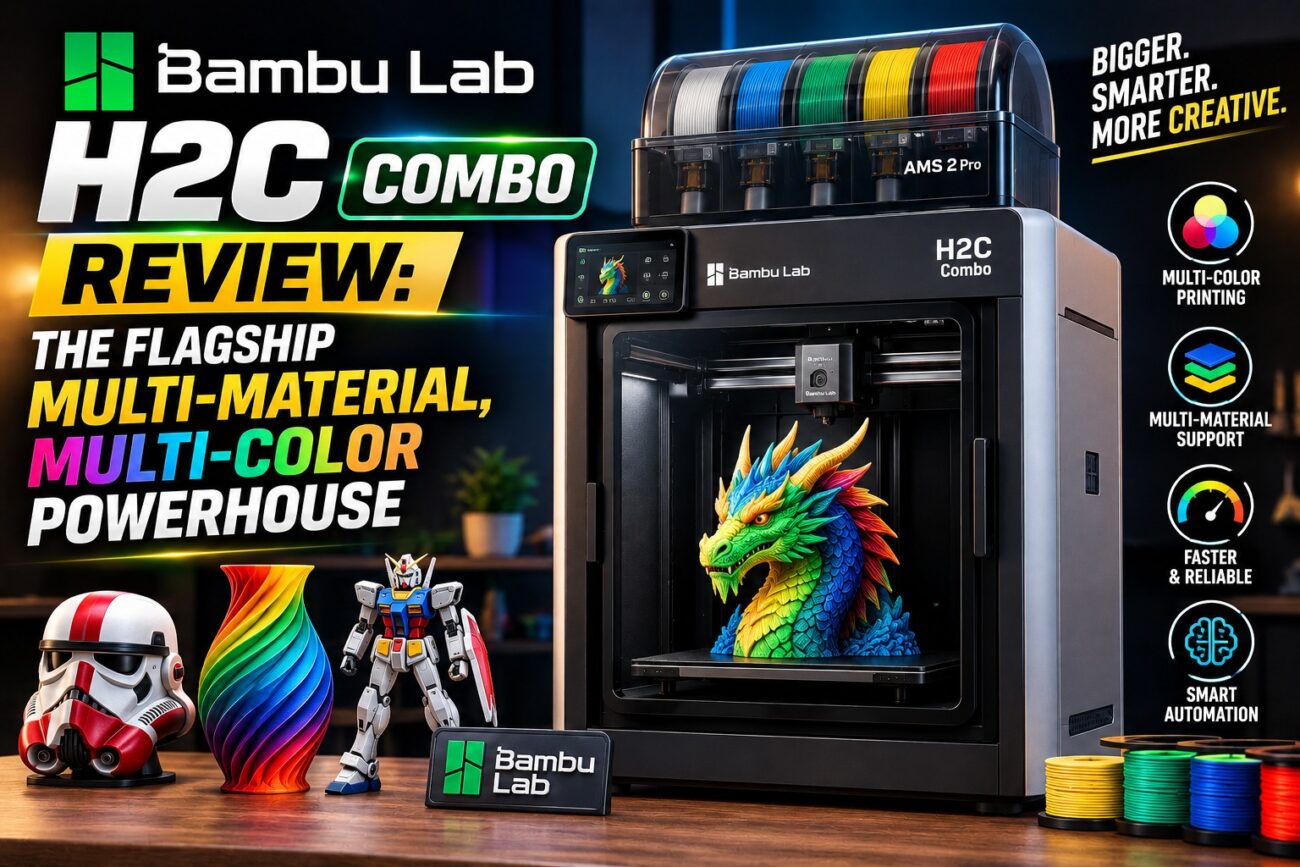
Sitting at the top of Bambu’s current lineup, the H2C Combo is built for creators and businesses that need the most advanced multi-material and multi-color capability Bambu offers. Its Vortek multi-hotend system allows near-seamless combination of materials like PLA, PETG, TPU, and high-temperature composites within a single print, with meaningfully less post-processing than AMS-based multicolor setups.
Key Features of the Bambulab H2C combo
Vortek Multi-Hotend System
Multiple dedicated hotends let the H2C combine different materials in a single print with minimal purging and post-processing, a step beyond single-nozzle AMS-driven color switching.
High-Temperature Material Support
Designed to handle demanding engineering materials alongside standard filaments, making it suited to functional, production-grade parts, not just cosmetics.
Enclosed, Heated Chamber
Shares the H-series enclosure and active heating for consistent results across a wide material range.
Best-in-Class Multicolor Production
For creators who change colors or materials constantly — daily multicolor work rather than occasional — the H2C is purpose-built to minimize waste and speed on those jobs specifically.
Upgrade Path from H2D
Bambu has confirmed an official (if complex) upgrade path from the H2D to the H2C for existing owners, though it’s a multi-hour process not recommended for beginners.
Bambulab H2C combo Full Specifications
Specification | Details |
Toolhead system | Vortek multi-hotend |
Chamber | Enclosed, actively heated |
Material range | PLA, PETG, TPU, and high-temperature composites |
Best for | 4–7 color / multi-material production workflows |
Speed note | Comparable to H2D on multicolor jobs; not the fastest single-color option (see H2S) |
Price | Estimated $2,500–$2,900 at launch; check current Bambu Lab pricing |
Who Should Buy the Bambulab H2C combo?
- Studios and small businesses running frequent, high-color-count production jobs
- Multi-material engineering parts combining rigid and flexible filaments in one print
- Creators who need professional-grade multicolor output with minimal manual cleanup
- Teams standardizing on one machine for both prototyping and finished multicolor products
Pros and Cons
Pros
- Most advanced multi-material, multi-color system in Bambu’s current lineup
- Meaningfully less post-processing waste than AMS-only multicolor setups
- Handles genuinely demanding high-temperature engineering materials
- Official upgrade path exists for H2D owners moving up the lineup
Cons
- Highest price point in the H-series lineup
- Not the fastest H-series machine on simple single-color jobs (H2S wins there)
- Complexity of the multi-hotend system is overkill for buyers who don’t need frequent color changes
Frequently Asked Questions
Who is the H2C actually for?
Buyers whose workflow involves changing colors or materials ‘all the time’ — daily production multicolor work — rather than occasional prints, per Bambu Lab’s own guidance.
Is the H2C worth it over the H2D?
If your bottleneck is genuinely high-color-count production (4–7 colors regularly), yes. If you mainly need occasional dual-material prints, the H2D is the more cost-effective choice.
Can I upgrade my H2D to an H2C later?
Yes, Bambu Lab has confirmed an official upgrade path, though it’s described as complex and multi-hour, better suited to experienced users or professional installation.
Final Verdict
The Bambulab H2C combo stands out in the multi-hotend professional 3d printer category for makers who need studios and small businesses running frequent, high-color-count production jobs. With the specifications and real-world use cases outlined above, it’s a strong candidate for anyone evaluating their next 3D printing or scanning investment.
Ready to buy the Bambulab H2C combo? Dream Shapes 3D stocks the Bambulab H2C combo with genuine manufacturer warranty, expert pre-sales advice, and after-sales support. Visit Dreamshapes3d.com to check current pricing and place your order today.